Pay in installments of $6.55 with
 ,
,
 and
and

Shipping Estimate
USA
- USA
- CAN
- USA
- CAN
Ships within 48 hours · Estimated delivery Jul 1 - Jul 6
 Promo Codes Available:
For Your Every Summer RSVP, with Code: SUMMER15
Description
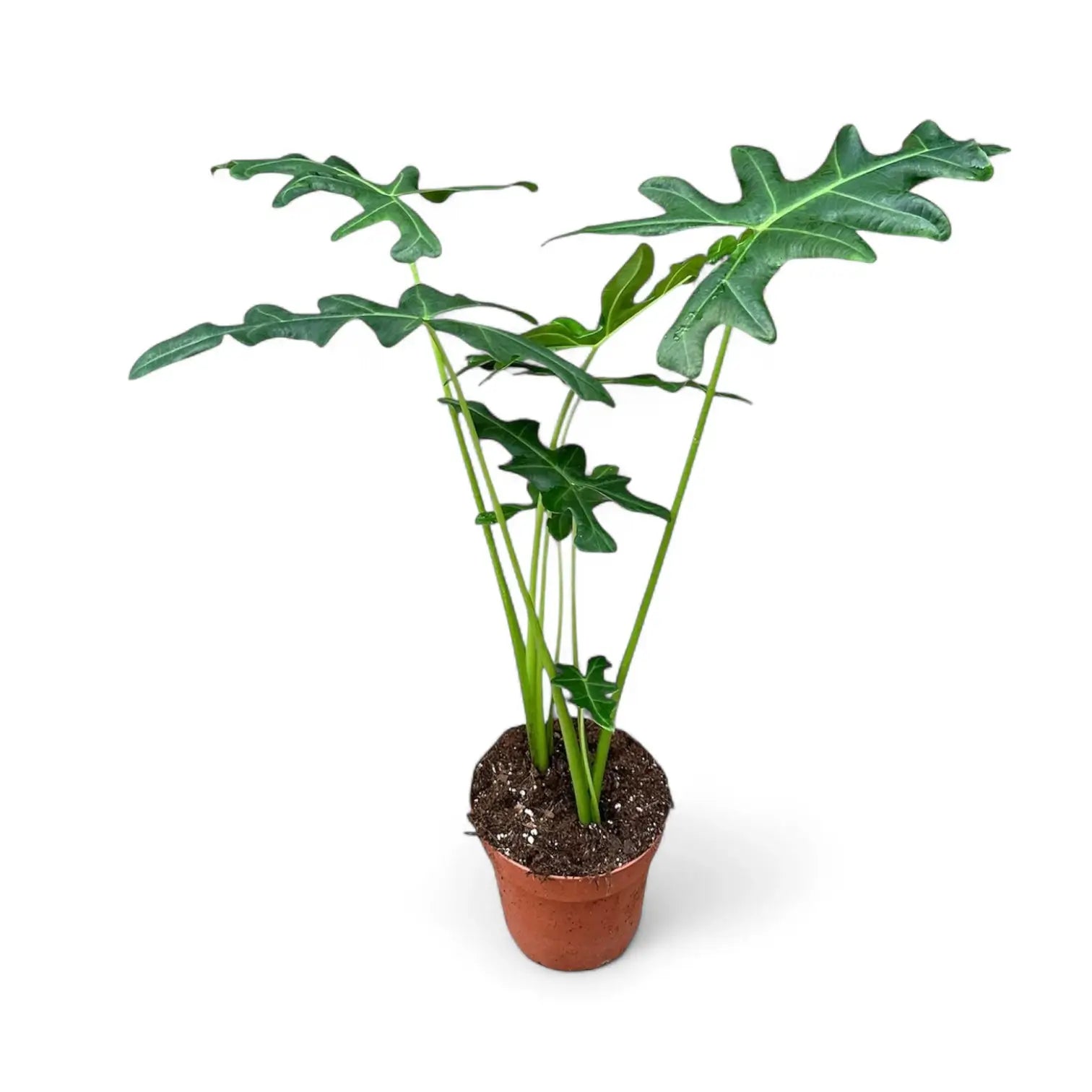
potted plants white background Alocasia porteiAlocasia portei Alocasia portei is a large green leaved Alocasia species with a thick upright stem, long mottled petioles and huge leaves divided into narrow lobes. It is native to Luzon in the Philippines and is an arborescent Alocasia: a mature plant builds height from a trunk like base and develops a canopy of divided leaves above it. Even as a young potted plant, the deeply cut blades show the divided leaf structure that becomes broader and more
Alocasia portei
Alocasia portei is a large green-leaved Alocasia species with a thick upright stem, long mottled petioles and huge leaves divided into narrow lobes. It is native to Luzon in the Philippines and is an arborescent Alocasia: a mature plant builds height from a trunk-like base and develops a canopy of divided leaves above it. Even as a young potted plant, the deeply cut blades show the divided leaf structure that becomes broader and more canopy-like with age.
In the wild, Alocasia portei can become massive, with an erect stem and leaves that reach far beyond normal indoor scale. In a pot, it still needs generous space, strong filtered light and enough root volume to build a tall, deeply divided base. Warm rooms, conservatories, plant rooms and greenhouse-style growing give its petioles room to rise and its leaf segments space to open.
Deeply divided leaves and trunking habit
The leaf blade of Alocasia portei is sagittate and deeply pinnatifid, meaning the blade is cut into long narrow segments while still joined along the central blade structure. Mature leaves can develop strongly crisped margins, a firm leathery texture, and prominent veins below. The leaf looks carved, open, and vertical, with each segment catching light separately.
The petioles can be long and strongly marked, ranging from yellowish green to darker green with chocolate mottling. As the plant matures, the stem thickens and the older base can develop a patterned, bark-like surface. Wild plants have been described as arborescent and up to several metres tall, with stems thickening heavily at the base. Indoor plants stay smaller, but they still need a weighty pot, room above the base, and a substrate that can hold a large root system while retaining open air spaces over time.
Luzon origin and rainforest growth
Alocasia portei is accepted as a Luzon species from the Philippines and grows in the wet tropical biome. Habitat notes connect it with secondary forest at low to medium elevations, where warmth, seasonal rainfall, filtered light, and open organic ground layers allow its large root system to spread. Big leaves gather light in broken forest shade, while the upright stem lifts the base above surrounding vegetation.
In cultivation, the tall structure needs strong but filtered light, consistent warmth at the roots, a pot that resists tipping and a mix with lasting air spaces. A small juvenile plant can grow in standard indoor conditions, while older specimens need more headroom, airflow and root volume as petioles lengthen. During warm months, it can use water and nutrients generously. Through the low-light season, water only after the lower pot has dried enough for reduced leaf demand.
Space, container growth and seasonality
Alocasia portei grows upward from a thickened base and gradually increases the size of both leaves and petioles. The plant can lose older leaves as the stem extends, leaving marks along the base and concentrating fresh growth near the base. Choose the pot for balance as much as root room. A heavy nursery pot inside a broad cover pot, or a wider-based container with excellent drainage, reduces the chance of the plant leaning once a new large leaf hardens.
Seasonal change is visible in the base. In bright, warm conditions, the plant can push large leaves and may respond quickly to fertilising. In cooler or darker conditions, it may slow down, hold fewer active leaves, or pause between growth flushes. Use warmth and bright conditions through winter, reduce watering to match actual drying, and avoid heavy pruning unless a leaf is fully spent or damaged.
Root space for a larger portei
- Light: Provide strong filtered light. Use a bright conservatory, greenhouse bench or large east- or west-facing window with strong filtered light. Acclimate slowly before any outdoor summer placement, and protect the leaves from harsh direct sun.
- Watering: Water deeply when the upper 20–30% of the mix has dried, then drain the pot fully. Large plants can drink heavily in warmth, but cool wet substrate can damage roots. Use pot weight, lower-pot moisture, and leaf activity as cues.
- Substrate: Choose a chunky mix that retains structure under a heavy root system. Bark, coarse coco chips, pumice, perlite, and a fertile organic fraction give moisture retention and air movement. Refresh collapsed mix before it compacts around the rhizome and stem base.
- Temperature: Maintain warmth, ideally 20–30 °C while the plant is actively growing. Growth slows in cooler conditions, and cold combined with wet roots can cause base and root decline. Place the base away from cold floors in winter.
- Humidity and airflow: Humid but ventilated air lets cut segments unfurl cleanly. Air movement is important around large leaves and the base, so avoid sealing a mature plant in stagnant conditions.
- Fertilising: Apply diluted balanced fertiliser every few waterings as the plant produces new leaves. A large plant can use nutrients quickly, but heavy fertilising on dry or stressed roots can burn tips and edges. Flush periodically if salts build on the substrate surface.
- Repotting: Repot when the plant is root-bound, leaning from a crowded base, or growing in tired substrate. Increase pot size gradually and set the stem base at a similar depth. Very large specimens are easier to manage with a potting partner because the petioles and stem can be brittle under pressure.
- Propagation: Offsets are the cleanest home method when they form at the base. Separate only rooted offsets with an active growing point. Thick rhizome cuts need warmth, clean tools, and careful moisture control to reduce rot risk.
- Mineral substrates: Rooted divisions can adapt to inert mineral or semi-hydro systems after gradual transition, with shallow water levels, warm roots and firm stem-base tissue.
Trunk and leaf-edge stress
Wilting on Alocasia portei can come from dry roots, damaged roots, cold shock, or a pot that has stayed wet for too long. Check the substrate before reacting with more water. If the mix is dry through much of the pot, a deep watering often restores firmness. If the mix is wet and the petioles remain limp, inspect roots and the stem base for rot.
Crisping along the divided leaf margins often indicates interrupted water flow. Low humidity, inconsistent watering, salt build-up, or root restriction can all show at the edges first because the leaves are so large and segmented. Brown patches can also appear after sudden exposure to direct sun, especially on leaves that expanded under softer indoor light.
Mites and thrips can mark the leaves with fine speckling, dull areas, and distorted new segments. Inspect the underside of each blade and the folds of emerging leaves. Because the plant can become large, early pest checks are easier than treating a fully expanded base. If new leaves emerge smaller while the plant has enough light and warmth, check root volume, substrate condition, and hidden pest pressure before increasing fertiliser.
Inflorescences on mature portei
Mature Alocasia portei can produce clustered paired inflorescences in the centre of the leaf cluster. Mature inflorescences have long peduncles, mottled spathes and a spadix shorter than the spathe. Flowering is uncommon in ordinary indoor rooms, but it becomes more plausible in warm greenhouse conditions with a strong root system and enough space for the plant to develop. In cultivation, flowering signals an established mature specimen, while the divided leaves remain prominent.
Deeply cut leaves in indoor spaces
Alocasia portei is toxic to pets and children that chew plants. Chewed leaves, petioles or underground parts can irritate the mouth and stomach; place the large plant safely away from pets and children.
Portei and divided Luzon foliage
Alocasia portei was first published by Heinrich Wilhelm Schott in 1862 and is accepted as a Philippine species from Luzon. The epithet portei honours Marius Porte, a French plant collector associated with tropical plant exploration in the nineteenth century. The older synonym Schizocasia portei appears in botanical history, while the accepted name remains Alocasia portei.
Give Alocasia portei headroom, a weighty pot and filtered light as the divided leaves and thick base develop.
Shipping Notes
- Free Standard Shipping on $100+ Orders to the USA.
- Except Preorder products are shipped in 48 hours.
- Delivery to the USA:
- Standard Shipping : 3-10 business days
- If time is of the essence, please consider selecting expedited delivery for faster service.
Exchange/Return Notes
- We offer a 30-day return/exchange service after receiving.
- Final sale items are not eligible for returns or exchanges.
- To process your return/exchange, please contact us at [email protected]
- Please click here for more details>>> Return & Exchange Policy