Pay in installments of $7.14 with
 ,
,
 and
and

Shipping Estimate
USA
- USA
- CAN
- USA
- CAN
Ships within 48 hours · Estimated delivery Jul 2 - Jul 7
 Promo Codes Available:
For Your Every Summer RSVP, with Code: SUMMER15
Description
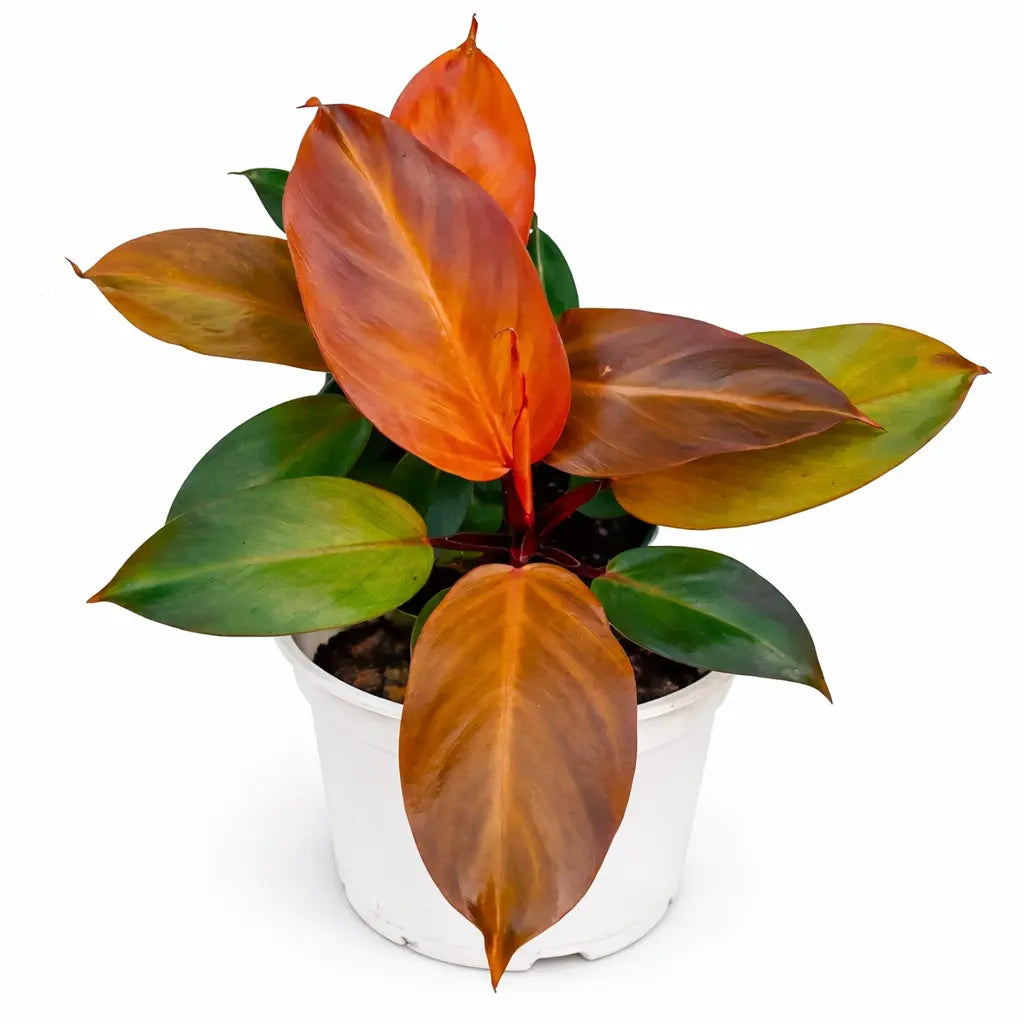
philodendron mccolley's finale indoor care Philodendron McColley's FinaleThe Philodendron McColley's Finale is a miniature autumn forest in a single pot. New leaves emerge from the centre of the plant in deep copper red, rich and warm, then travel through bronze and cinnamon before maturing to a deep, glossy green so at any given moment the plant carries the entire palette of an October canopy simultaneously, from the newest spear at the heart to the outermost mature leaves. It was bred by Robert McColley, the celebrated
The Philodendron McColley's Finale is a miniature autumn forest in a single pot. New leaves emerge from the centre of the plant in deep copper-red, rich and warm, then travel through bronze and cinnamon before maturing to a deep, glossy green — so at any given moment the plant carries the entire palette of an October canopy simultaneously, from the newest spear at the heart to the outermost mature leaves. It was bred by Robert McColley, the celebrated Florida hybridist who spent decades developing Philodendron cultivars, and is said to be the last hybrid he released before retiring — his Finale. A self-heading, mounding plant that grows into a tidy, vase-shaped form without climbing and without needing a moss pole, it is one of the most adaptable and forgiving Philodendrons available: genuinely tolerant of medium and lower-light conditions where many colour-leaved aroids struggle, fast enough to reward consistent care with regular new growth, and compact enough at 60–90 cm to suit desks, shelves, and every well-lit corner of an Indian home.
Light
▾
Medium to bright indirect light — one of the more light-adaptable colour-leaved Philodendrons available. An east or west-facing window is ideal; it performs respectably in medium light conditions that would cause many other aroids to lose their colour entirely. The copper-red tones are most vivid and longest-lasting in bright indirect light; in medium light the colour phase shortens but does not disappear. Avoid direct harsh afternoon sun — it scorches and bleaches. Gentle morning sun is fine. A grow light at 12–14 hours is excellent for consistent new growth and maximum colour expression.
Watering
▾
Allow the top 3–5 cm to dry before watering thoroughly. McColley's Finale prefers to dry a little more between waterings than moisture-loving aroids — consistently soggy soil is the primary cause of root rot in this cultivar. Use room-temperature water; filtered water is preferable. Empty the saucer after watering and never allow to stand in water. Reduce frequency slightly in winter but do not allow to dry out completely. Check weekly and water when the top layer is clearly dry.
Humidity
▾
50–60% preferred — average Indian indoor humidity is typically adequate. A humidifier or pebble tray improves leaf quality and colour vibrancy, particularly in AC-heavy environments. Keep away from cold AC drafts and heating vents. Do not mist directly onto the leaves — water sitting on the surface encourages fungal spotting. India's tropical climate is naturally supportive for outdoor or semi-outdoor growing on a shaded balcony or porch.
Growing Media
▾
Well-draining, organically rich aroid mix — 40% quality potting soil or coco coir, 25% orchid bark, 25% perlite, 10% worm castings. pH 5.5–7.0. The mix must drain freely; self-heading Philodendrons sit in their pots rather than climbing, making well-aerated roots especially important. Repot every 1–2 years in spring, one pot size up. The plant prefers to be slightly snug rather than over-potted. Always use a pot with drainage holes; terracotta is a good option for extra moisture regulation.
Feeding
▾
Balanced liquid fertilizer at half strength every 2–3 weeks in spring and summer. The steady production of new coloured leaves rewards consistent feeding — larger leaves and more frequent flushes of warm-toned new growth are visible results of a good feeding schedule. Apply to moist soil only. Flush every 3 months to clear mineral salt build-up. Reduce to monthly in autumn; stop in winter. Avoid high-nitrogen formulas which push rapid soft growth at the expense of robust leaf development.
New Leaves Coming Out Mostly Green — Colour Fading
▾
Insufficient light — the copper-red phase shortens significantly in lower light. Move to a brighter indirect position or add a grow light. Unlike many colour-leaved aroids, McColley's Finale is tolerant of medium light, but even it needs reasonable brightness to maintain its warm tones. The colour cannot disappear permanently — it will return with improved light within 1–2 growth cycles. This is not reversion.
Yellow Leaves
▾
Overwatering — the most common McColley's Finale problem. Allow the top 3–5 cm to dry before the next watering. One older lower leaf cycling as new growth pushes is normal. Widespread yellowing with soggy soil: unpot, trim blackened roots, repot in fresh well-draining mix, and adjust watering going forward. This cultivar is more sensitive to overwatering than its hardiness suggests.
Brown Leaf Tips or Edges
▾
Low humidity, tap water minerals, or direct sun. Boost humidity above 50%, switch to filtered water, and move away from any direct sun exposure. Flush the soil to clear accumulated mineral salts. Existing brown tips are permanent — trim neatly at a slight angle; new growth in better conditions will be clean.
Leggy or Lopsided Growth
▾
The plant is reaching toward its light source — rotate a quarter turn every 2–3 weeks to maintain the symmetrical vase shape. If already significantly lopsided, increase overall light and begin regular rotation to gradually correct the form. Pruning a stem back to a healthy node redirects energy to more balanced branching.
Thrips or Spider Mites
▾
Inspect new copper-red growth regularly — thrips target unfurling leaves. Silver streaking or distorted new leaves: spinosad spray every 5–7 days for 4 weeks, quarantine immediately. Spider mites in dry conditions: boost humidity and treat with neem oil or insecticidal soap every 5–7 days for 3 weeks.
📋 Quick Plant Profile
| Botanical Name | Philodendron 'McColley's Finale' |
| Named After | Robert McColley — Florida hybridist; 'Finale' as his last Philodendron hybrid before retiring |
| Common Names | McColley's Finale, Autumn Philodendron, McColley Hybrid Philodendron |
| Family | Araceae |
| Colour Journey | Deep copper-red → bronze → cinnamon → deep glossy green; all stages visible simultaneously |
| Colour Type | Stable genetic trait — not variegation; every new leaf copper-red; does not revert |
| Colour Key | More light = longer, deeper copper phase; medium light = shorter but still present |
| vs. Prince of Orange | McColley's = deeper red-copper-bronze tones (autumnal); Prince of Orange = vivid citrus orange; McColley's more light-tolerant |
| Growth Habit | Self-heading, upright mound; vase-shaped; does not climb; no moss pole needed |
| Light | Medium to bright indirect; one of the most light-adaptable colour-leaved Philodendrons; no direct sun |
| Watering | Top 3–5 cm dry between waterings; well-draining mix essential; do not sit in water |
| Humidity | 50–60%; adaptable to average indoor humidity; no misting on leaves |
| Temperature | 18°C–30°C; no cold drafts; thrives in Indian indoor conditions year-round |
| Mature Size | 60–90 cm height; 30–40 cm spread; compact vase shape |
| Rotation | Quarter turn every 2–3 weeks for even, symmetrical vase-shaped growth |
| Ideal For | Desks, Shelves, Tabletops, Medium-Light Rooms, Collectors, Gifting, Beginners and Experts Alike |
| Care Level | Easy — the most forgiving of the colour-changing Philodendrons; avoid overwatering and give reasonable light |
Shipping Notes
- Free Standard Shipping on $100+ Orders to the USA.
- Except Preorder products are shipped in 48 hours.
- Delivery to the USA:
- Standard Shipping : 3-10 business days
- If time is of the essence, please consider selecting expedited delivery for faster service.
Exchange/Return Notes
- We offer a 30-day return/exchange service after receiving.
- Final sale items are not eligible for returns or exchanges.
- To process your return/exchange, please contact us at [email protected]
- Please click here for more details>>> Return & Exchange Policy